Chartering a private jet is less mysterious than it looks. You tell a charter provider where and when you want to go, compare a few quotes, sign an agreement, pay, and show up at a private terminal shortly before departure. This guide walks through each step so you know what to expect and what to check along the way.
The basics of on-demand charter
On-demand charter means you hire an entire aircraft, with its crew, for a specific trip. You choose the departure time, the airports, and usually the aircraft category. Unlike an airline ticket, the price covers the whole airplane, so the cost is the same whether one person flies or every seat is full.
In the United States, companies that fly paying passengers on demand generally operate under FAA Part 135, the set of rules for commuter and on-demand commercial operations. That certificate matters, and we cover how to check it below. For a deeper look, see our guide to Part 135 vs. Part 91.
Charter is available from many U.S. airports, including small general aviation fields that airlines do not serve. That access is one of the biggest practical advantages: you can often land closer to where you are going and skip the long walk through a large terminal.
It also helps to know what charter is not. It is not a seat on a scheduled flight, and it is not a membership. Each trip is its own transaction, with its own quote and agreement. If you later fly often, programs such as jet cards can simplify things, but the steps below are the foundation of every charter booking.
Step 1: Request a quote
A good quote starts with good information. The more precise your request, the more accurate the numbers you get back. Be ready to share:
- Route: departure and arrival cities, and preferred airports if you have them. Smaller airports close to your destination can save drive time.
- Dates and times: including any flexibility. A window of a few hours can open up cheaper options.
- Passengers: the number of adults, children, and pets.
- Baggage: count and size, plus anything unusual such as golf bags, skis, or musical instruments.
- Trip type: one-way, round trip, or multi-leg, and how long you will stay at the destination.
With that, a provider can suggest suitable aircraft. For short hops with a few passengers, a light jet or turboprop is often enough; longer trips or bigger groups call for larger cabins. You can browse categories in our aircraft section.
Step 2: Compare quotes and operators
Quotes can look similar at first glance but differ in important ways. When you line them up, compare:
What is included
Check whether the price includes federal excise tax, segment fees, airport and handling fees, crew overnight costs, and catering. Some quotes are all-in estimates; others show the base flight cost with extras listed separately. Our charter cost guide explains the typical components.
Who operates the flight
Many bookings go through brokers, who arrange flights with operators that own or manage aircraft. Either path can work well, but you should always know the name of the company that will actually operate your flight and hold operational control. Ask for it in writing.
Aircraft details
Ask about the specific aircraft type, its approximate age or last interior refurbishment, seating layout, Wi-Fi availability, and whether it has an enclosed lavatory. These details affect comfort far more than the category name alone.
How many quotes to get
For most trips, two to four quotes give you a useful picture without taking too much time. If one quote is far below the others, find out why. The difference may come from a well-placed aircraft or a genuine discount, but it can also come from missing fees, an older aircraft, or unclear operator details.
Quotes are usually valid for a limited period, because aircraft availability changes quickly. If you like a quote, ask how long the price and aircraft will be held.
Step 3: Check safety and credentials
Before you commit, confirm that the operator holds a valid FAA Part 135 air carrier certificate. You can ask the operator or broker for the certificate holder name and number, and the FAA provides resources about certificated operators on faa.gov.
Many operators also undergo independent audits from organizations such as ARGUS, Wyvern, or IS-BAO. An audit rating is not a guarantee, but it shows the operator has been reviewed against published standards. Reasonable questions to ask include:
- Which company holds operational control of this flight?
- Does the operator hold any third-party safety audit ratings, and are they current?
- How many pilots will fly the trip, and what are their qualifications on this aircraft type?
- What happens if the scheduled aircraft has a maintenance issue?
Step 4: Review the charter agreement and pay
Once you pick a quote, you will receive a charter agreement or confirmation. Read it carefully. The key items are:
- Cancellation and change terms: how much you forfeit if you cancel, and by when.
- Variable costs: items billed after the flight, such as de-icing, extra waiting time, or catering.
- Substitute aircraft: whether the provider may swap in a different aircraft or operator, and whether you must approve it.
- Passenger and baggage limits: the numbers the flight has been planned around.
Payment is commonly made in full before departure by wire transfer, and some providers accept cards, sometimes with a processing fee. Clarify who receives your money and when. If anything in the agreement is unclear, ask before signing.
Step 5: Before and on flight day
In the days before departure, the provider will usually ask for passenger names as they appear on government ID, dates of birth, and any special requests such as catering or ground transport. For international trips, passport details are required well in advance.
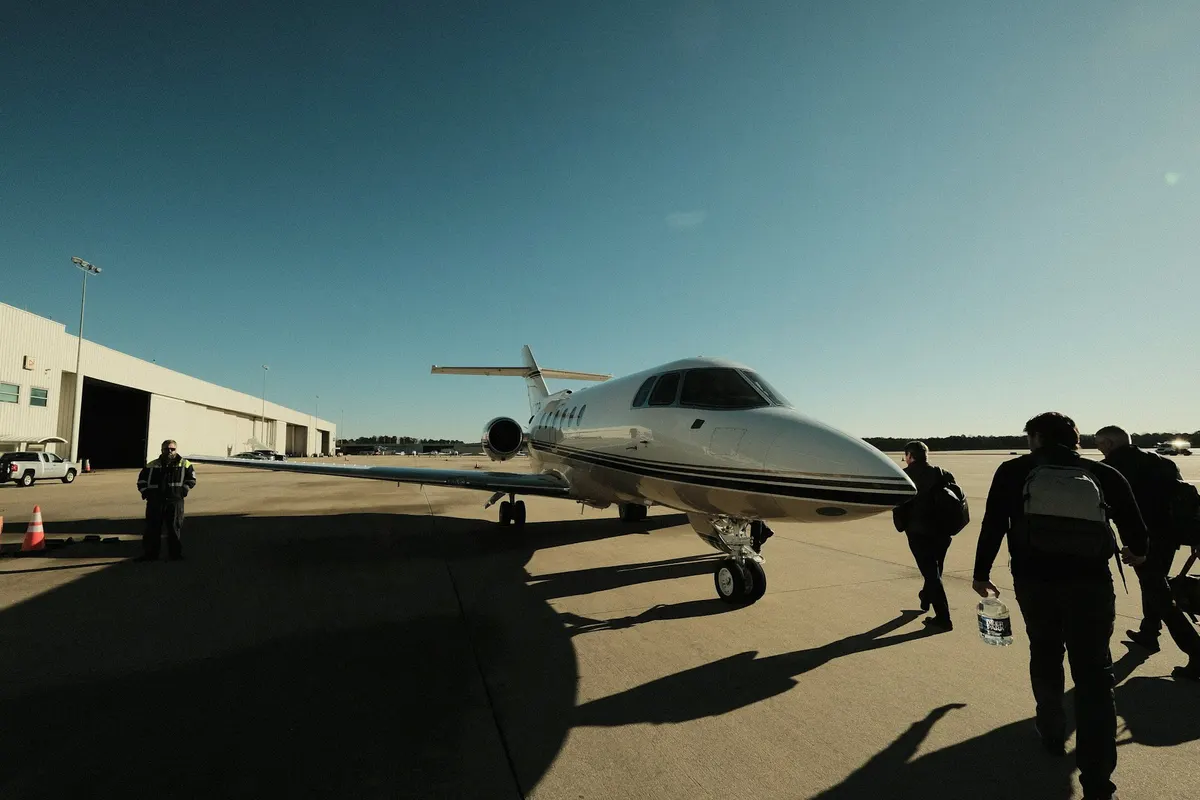
On the day, you go to a fixed-base operator, or FBO, which is the private terminal serving business aviation at the airport. Most passengers arrive 15 to 30 minutes before departure, though your provider may ask for more time on international trips. Private passengers on charter flights generally do not go through standard airline security lines, but crews check identification and may ask about baggage contents. You can find FBO details in our airports section.
The crew will greet you, load your bags, and give a safety briefing on board. Departure usually follows shortly after everyone is seated. For a full packing and arrival list, see your first private flight checklist.
Weather and delays
Private flights are still subject to weather, air traffic control, and maintenance. The pilots decide whether it is safe to fly, and a delay is sometimes the right call. Ask your provider how it communicates changes and what your agreement says about delays or cancellations caused by weather. Keeping your phone on in the hours before departure makes it easy for the team to reach you.
After you land
At arrival, the aircraft typically taxis to the FBO, where your car can often meet you close to the aircraft, subject to airport rules. Within days, you may receive a final invoice reconciling any variable costs. Compare it against your agreement and ask about anything unexpected.
If the trip went well, note the operator and aircraft for next time. Repeat travelers often find that working with a provider who knows their preferences makes each booking faster. If you fly often, it may be worth comparing on-demand charter with jet cards and fractional programs.
Frequently asked questions
How far in advance should I book a private jet charter?
Many trips can be arranged within a few days, and some operators can fly on shorter notice. For holidays, major events, or larger aircraft, booking weeks ahead gives you more choice and steadier pricing.
Do I pay for the whole aircraft or per seat?
Standard on-demand charter prices the entire aircraft, so the cost is the same whether you fill every seat or fly alone. Per-seat products exist but work differently from a whole-aircraft charter.
Is the price on my first quote final?
Not always. Quotes can change with availability, fuel, and schedule changes, and some costs such as de-icing, catering, or extra crew time may be billed after the trip. Ask which items are included and which are variable.